




A Complete Guide to Joint, Tendon, and Nerve Injections
Michael Harper MD, Interventional Sports Medicine Physician
So, you have an injury or pain in your joint, tendon, or nerve. Where do you start? In many cases, these injuries or conditions can be treated non-operatively, or without surgical intervention. If it is decided that your injury is not severe enough to need surgery, then here are some of your options.
Common non-surgical treatments include activity modification, physical therapy, exercises to optimize mechanics, medication, bracing, image-guided injections, or regenerative medicine.

How Joint, Tendon, and Nerve Injections Can Help with Pain
Orthopedic injections can be used to treat your joint, tendon, or nerve pain. Each injection type has specific benefits. The choice of which injection to use depends on the condition being treated for an individual.
Injections can help manage pain, reduce inflammation, and promote healing in joints, tendons, and sometimes nerves.
Types of Joint, Tendon, and Nerve Injections:
Types of Joint Injections for Arthritis and Pain Relief:

- Steroid Joint Injections
- Hyaluronic Acid Joint Injections
- Platelet Rich Plasma (PRP) Joint Injections
- Orthobiologic Joint injection
- Regenerative Medicine Joint Injection
- Shoulder Joint Injection
- Hip Joint Injection
- Knee Joint Injection
- Ankle Joint Injection
- Hand Joint Injection
- Subacromial Bursae Injection
- Greater Trochanteric Bursae Injection
Types of Tendon Injections for Pain Relief:
- Tennis Elbow (Lateral Epicondylitis) Injection
- Biceps Tendon Injection
- Iliopsoas Tendon Injection
- Calcific Rotator Cuff Injection
Types of Nerve Injections for Pain Relief:
- Nerve Block Injection
- Carpal Tunnel (Median Nerve) Injection
- Cubital Tunnel (Ulnar Nerve) Injection
- Lateral Femoral Cutaneous Nerve Injection
- Tarsal Tunnel Injection
- Suprascapular Nerve Block
- Genicular Nerve Block
If you have any questions about these injections, schedule an appointment with one of our orthopedic physicians to learn more.
Exploring Differences in Three Common Injections:
Corticosteroids (Cortisone Injections or Cortisone Shots)
What are corticosteroids and where are they used?

These are powerful anti-inflammatory medications, often injected directly into the affected area.
They’re commonly used for joint pain (various forms of arthritis), tendon problems, and nerve issues. Examples include knee osteoarthritis, tennis elbow and carpal tunnel syndrome.
What does a cortisone shot do?
Corticosteroids reduce swelling, pain, and inflammation quickly. This can help patients feel better in the short term, especially for conditions like arthritis or tendonitis. However, they shouldn’t be used too often, as long-term use may weaken tissues. Another consideration is if a patient has high blood pressure and diabetes as steroids can temporarily increase blood sugar and blood pressure.
How quickly does it take for a cortisone shot to work?
Steroid injections can take 3-5 days to take effect, but some patients are later responders, and it can take up to 2 weeks.
How often are cortisone injections administered?
Steroid injections can be performed in a 3-month time interval. However, you should discuss with your doctor what they recommend for the timing and frequency of steroid injections. Personally, I highly recommend having steroid injections performed 3 times or less per year.
Hyaluronic Acid

What is hyaluronic acid and where is it used?
Hyaluronic acid is a substance naturally found in the joints, where it acts like a cushion and lubricant. Injections of hyaluronic acid can help restore this cushioning effect.
Hyaluronic acid is mostly for joint problems, particularly in the knee for osteoarthritis; however, it can also be used in other joints.
What does a hyaluronic acid injection do?
Hyaluronic acid injections help improve joint lubrication, reduce pain, and allow for smoother movement. I like to think of it as an oil change for the joint. It is a good option for people with mild to moderate arthritis when other treatments haven’t worked. Additionally, we have not seen the same weakening effect in the tissues as we do in steroids.
How quickly does it take for a hyaluronic acid injection to work?
Hyaluronic acid injections tend to take a few weeks to see benefit, but some patients notice a difference in the first few days. These injections tend to last around 6 months.
How often are hyaluronic acid injections administered?
Hyaluronic injections are typically administered every 6 months, as most insurance plans provide coverage within this timeframe.
Platelet-Rich Plasma (PRP)
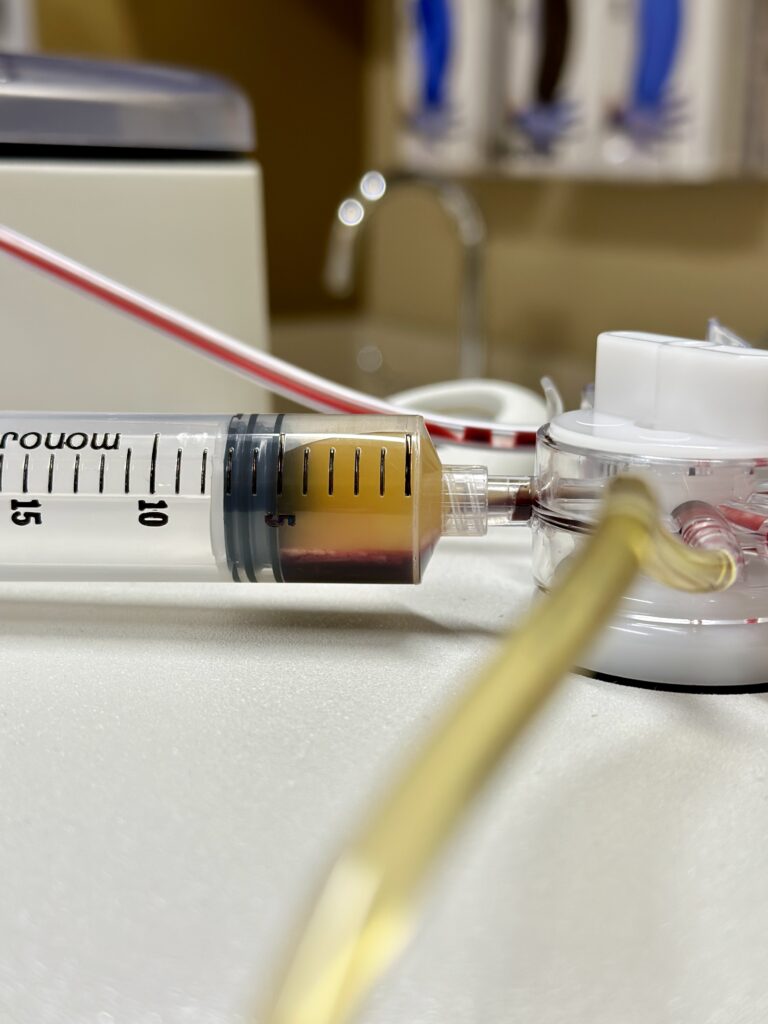
What are PRP injections and where are they used?
Platelet rich plasma (PRP) injections are the workhorse of Regenerative Medicine and Orthobiologics. It is made by taking your own blood, processing it to concentrate the platelets, and then injecting it into the damaged area. Platelets contain growth factors that promote healing and optimize inflammation. Not all locations treating with PRP are using the same protocols. Recent data shows that higher concentration and total number of platelets have higher success rates. This can be obtained by taking a larger volume of blood and utilizing a double spin centrifuge, both of which we do at OSMS.
PRP injections can be used in joints, tendons, and sometimes around nerves. It’s often used for tendon injuries and joint pain in the shoulder, elbow, knee, hip, and ankle.
What do PRP injections do?
PRP helps to speed up healing by promoting tissue repair and reducing inflammation. It’s often used for tendon injuries that haven’t responded well to other treatments or for chronic joint pain. We have not seen that PRP will regrow cartilage, but it can help with managing symptoms of arthritis and optimize inflammation. Data on PRP injections show that the effect can be longer than steroids and hyaluronic acid for knee osteoarthritis. We are seeing that inflammatory markers can be reduced after PRP. Additionally, we have not seen the same weakening effect in the tissues as we do in steroids. Studies have also suggested it may slow the progression of knee osteoarthritis.
How quickly does it take for PRP injections to work?
PRP for the tendon takes weeks to allow for tendon healing. I tell patients that they may start to notice some improvement in the first 6 weeks, but it is typical for the benefit to be seen between 6 and 12 weeks.
How often are PRP injections administered?
The timing and frequency of PRP injections is actively being researched. Some protocols have one injection performed and others have a series of injections. Repeat PRP injections are individualized based on the response to the prior injection. Generally, PRP injections can be repeated every 6 months to a year, but in some situations, it can be done sooner.
Platelet-Poor Plasma (PPP)
Platelet-Poor Plasma (PPP) is another orthobiologic derived from your own blood. While PRP contains more platelets, PPP contains fewer as well as different growth factor concentrations as it is used for different clinical purposes. PPP is typically used for the early stages of muscle injuries. With this injection, the goal is to modulate inflammation, reduce pain, and support early tissue recovery.
What about Stem Cell injections?
Bone Marrow Aspirate Concentrate (BMAC)
Marketed as stem cells, Bone Marrow Aspirate Concentrate (BMAC) is an advanced orthobiologic treatment that involves a bone marrow harvest, which is processed and injected into the targeted area using image guidance. The injection contains bone marrow-derived cells, growth factors, and cytokines that will be applied into a joint, bone, or tendon.
Although there is a role for these treatments in some patients, most orthopedic conditions do not require these treatments. However, if PRP alone is insufficient, BMAC may provide a more robust biologic response when treating conditions involving the bone in addition to the joint or tendon. For most conditions, we recommend patients trial PRP over BMAC given the current scientific literature, out of pocket cost, and discomfort harvesting bone marrow causes.
PRP Injection Cost and Insurance
Since PRP Injections and BMAC are not covered by insurance, we encourage patients to talk with one of our Patient Advocates or someone in our Business Office about your payment options. Oftentimes, our patients utilize HSA or FSA funds.
To contact our Patient Advocates, call our main line 920-430-8113 and ask to speak with a Patient Advocate.
Contact the OSMS Business Office at: 920-430-8120
Concerns, Risks, and Side Effects of Orthopedic Injections
Common Concerns and Potential Side Effects of Joint Injections:
- Infection
- Pain at Injection Site
- Cartilage Damage
- Reduced Immune Function
Potential Side Effects of a Steroid Injection:
- Skin Discoloration
- Elevated Blood Sugar
- Fat Atrophy
- Joint Weakening
Common Concerns and Potential Side Effects of Tendon Injections:
- Tendon Rupture
- Infection
- Pain and Swelling
- Reduced Healing
- Tendon Weakening
- Skin Changes
- Temporary Flare-Up of Pain
Common Concerns and Potential Side Effects of Nerve Injections:
- Nerve Damage
- Infection
- Temporary Increase in Pain
- Localized Nerve Effects
- Skin Discoloration
- Elevated Blood Sugar
- Fat Atrophy
- Weakness or Paralysis

Injections are a non-surgical treatment option that are usually just part of a broader treatment plan. This plan may include additional non-operative treatment options such as physical therapy and lifestyle changes. Always talk with your doctor to figure out the best option(s) for your unique situation.
If you have any questions about non-surgical treatment options, or would like to be evaluated for non-surgical treatment options, give our office a call at (920)-430-8113 or schedule an appointment at: Schedule An Appointment – OSMS