


What are Non-Operative Specialty Services? Your Complete Guide
While in certain cases surgery may be the solution to a musculoskeletal condition or injury, many patients can be treated non-operatively, achieving excellent outcomes without surgical intervention. In fact, less than 30% of our patients at OSMS have surgery. That is where our non-operative physicians come in.
But what is non-operative care, and what are the different types of non-operative care provided at OSMS?
Based in Green Bay, Fox Valley and Oshkosh locations, our non-surgical physician team includes physician’s residency trained in Physical Medicine & Rehabilitation, fellowship trained in Pain Management and Sports Medicine, and board-certified in Electrodiagnostic Medicine. Together, they provide patients with comprehensive, conservative treatment options to get back to doing what they love.
What is Non-Operative Care?
Non-operative care, commonly referred to as non-surgical or conservative care, is when patients are treated for their joint, bone, tendon, ligament, nerve or muscle injuries and pain without having surgery or going through an operation.
Types of non-operative specialty services offered at OSMS include:
- Physical Medicine & Rehabilitation
- Pain Management
- Interventional Sports Medicine
- Electrodiagnostic Medicine
What is Physical Medicine & Rehabilitation (PM&R)?

Physical Medicine & Rehabilitation (PM&R), otherwise known as physiatry, is a non-operative specialty concentrated on diagnosing and treating musculoskeletal and neurological conditions by emphasizing and evaluating the whole patient. This means that PM&R Physicians evaluate their patients in a holistic way, working to understand the foundation or reasoning behind how or why a patient is in pain.
The goal of PM&R is to get one’s musculoskeletal functions back to normal, so that everyday things are done in the most functional way possible.
Physical Medicine and Rehabilitation is a 4-year medical residency specializing in musculoskeletal and neurological conditions of the body such as muscle strains, joint problems, pinched nerves, low back pain along with many others.
What is Pain Management?

Pain Management, like Physical Medicine & Rehabilitation, is a non-operative specialty service that aims to diagnose and alleviate musculoskeletal and neurological pain through various conservative interventions.
Pain Medicine specialists are trained in a wide range of interventional procedures, including spine injections and nerve-targeted therapies. Other interventions they recommend to patients for treatment include medications and physical or occupational therapy.
A Pain Medicine fellowship is a one-year advanced subspecialty training, following residency, which focuses on the evaluation and treatment of both acute and complex, often chronic pain conditions. A Pain Management fellowship provides more specialization in spine issues such as pinched nerves, and spine arthritis, as well as advanced procedures like x-ray guided and ultrasound guided injections. This includes epidural steroid injections, nerve blocks, and more.
See the full list of conditions our pain management physicians treat.
What is Interventional Sports Medicine?

Interventional Sports Medicine is a specialized, non-operative approach to diagnosing and treating musculoskeletal injuries and pain. Sports Medicine physicians emphasize a deep understanding of biomechanics, injury patterns, and functional movement—not just what hurts, but why it hurts.
Care is individualized and often combined with rehabilitation, activity modification, and performance-focused strategies to address the root cause of injury. The goal of Interventional Sports Medicine is to help patients move better, heal smarter, and return to the activities they love without surgery, whenever possible.
A Sports Medicine fellowship is a one-year advanced post-residency training focused on advanced instruction in injury prevention, biomechanics, ultrasound-guided procedures, rehabilitation, and return-to-play decision-making. Sports Medicine fellows work closely with athletic teams and active populations, gaining experience caring for both competitive athletes and individuals who simply want to stay active and pain-free.
See the full list of conditions our sports medicine physicians treat.
What is the Difference Between PM&R, Pain Management, and Interventional Sports Medicine?
Although there are overlaps in PM&R, Pain Management, and Sports Medicine, there are differences to consider.
- Typically, Sports Medicine focuses on an active population, treating peripheral joints, while PM&R and Pain Management tend to concentrate on chronic conditions of the spine and neck.
- Although our non-operative physicians can perform both ultrasound guided injections and fluoroscopic (x-ray) guided injections, our Pain Management physicians more frequently use fluoroscopic (x-ray) guidance for procedures, while our sports medicine physicians more often use Ultrasound guidance.
What is Electrodiagnostic Medicine?
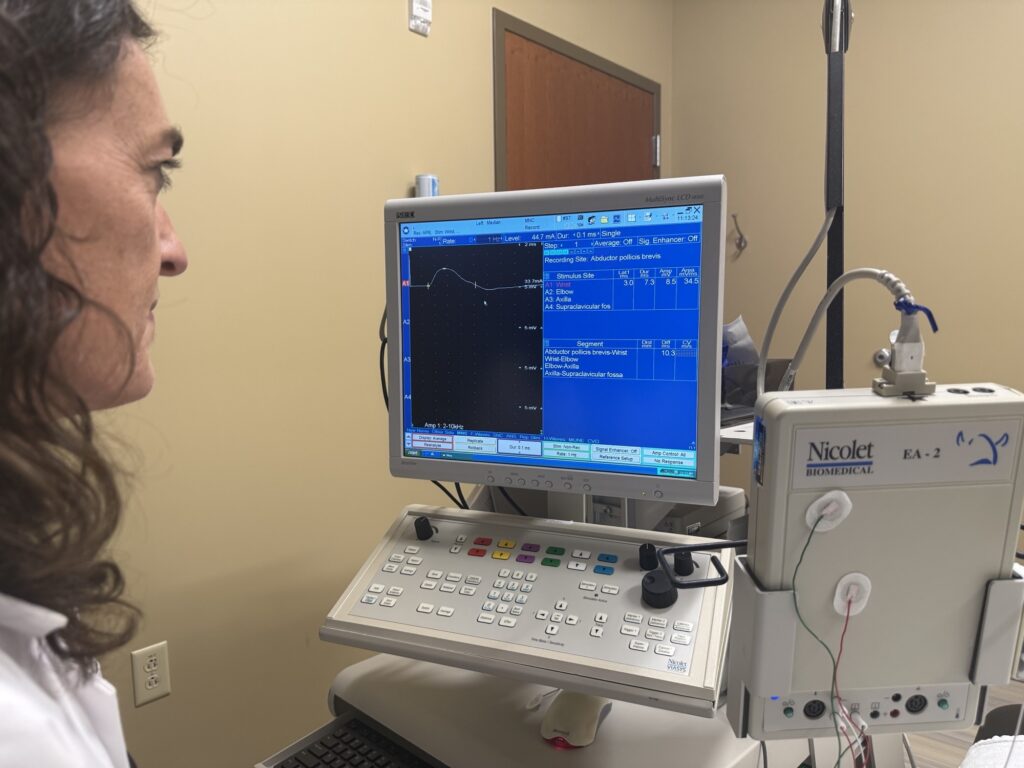
Electrodiagnostic medicine is a field of medicine that tests the function of the peripheral nervous system. The study has two parts – electromyography (EMG) and nerve conduction studies (NCS).
The test is performed to determine the underlying cause of pain, numbness, or weakness patients are experiencing. It also helps determine the severity of the nerve damage, whether the damage is still actively occurring, and localizes where the problem is coming from in the body.
The goal of this electrodiagnostic test is to provide the referring physician guidance towards the most effective treatment plan for patients.
While not all physicians who perform EMG/Nerve Conduction Studies are board-certified, our experts in electrodiagnostic medicine are board-certified, which requires them to pass a rigorous test and maintain certification with continuing medical education credits.
Learn more about EMG and NCS Studies and what to expect.
Why Choose Non-Operative Care at OSMS?
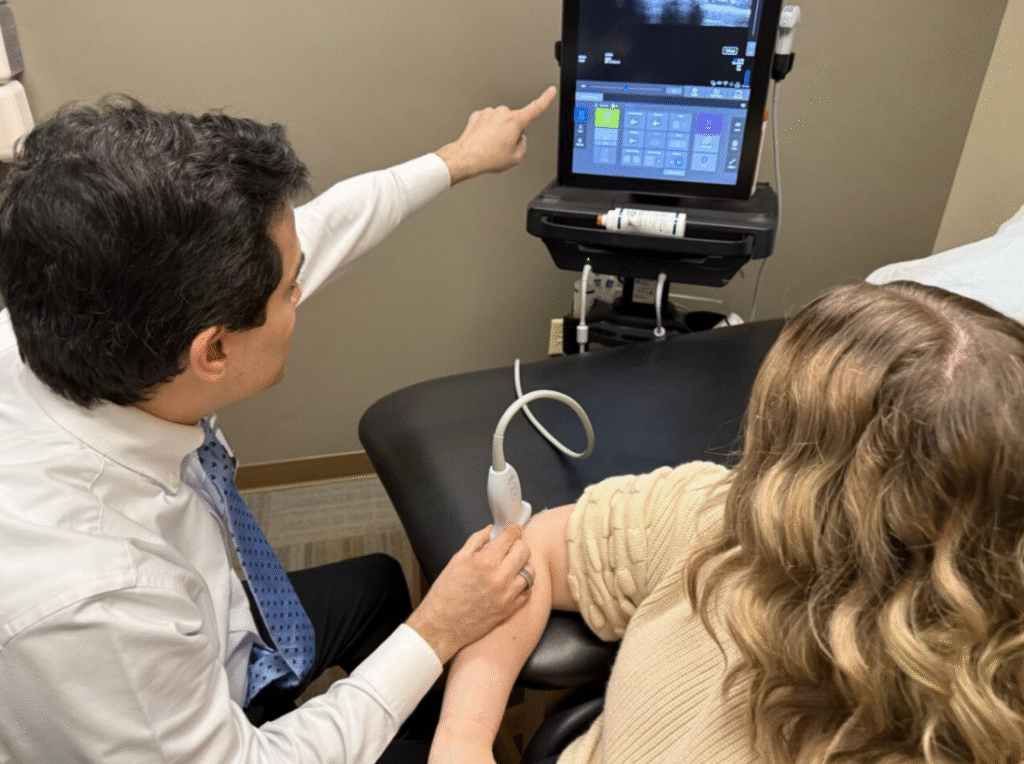
Conservative treatments can offer many patients effective relief and recovery from musculoskeletal and neurological conditions.
Benefits include:
- Alternative to surgery
- Image-guided injections and procedures for accurate medication placement
- Advanced treatment options including orthobiologics and regenerative medicine
- Comprehensive and personalized pain management
- On-site, advanced diagnostic services for precise condition diagnosis (MRI, X-ray, Ultrasound, EMG, and CT scans for extremities)
- Cost Savings
In-Office Convenience and Cost Savings
Since 99% of non-operative procedures are performed in the office at OSMS, patients experience cost savings and can even return home the same day.
That means patients:
- Receive their treatment on-site, at the OSMS clinic they are familiar with, which saves them from having to take a trip to another facility.
- Experience lower costs as a result of no additional facility fees.
- Return faster to their daily activities since no extended stay is necessary during non-operative injections or procedures.
Non-Operative Interventions at OSMS
Designed to relieve pain, restore function, and delay or prevent the need for surgery, our non-operative team provides a wide range of advanced treatments in-office, using state-of-the-art-technology for precision and safety.
- Guided Injections – Performed via ultrasound or fluoroscopy (X-ray), to precisely administer medication or biologic treatments to the source of pain for maximum effectiveness.
- Joint Injections – Administered to injured or arthritic joints such as the knee, shoulder, or hip to reduce inflammation and improve function.
- Tendon Injections & Tenotomies – Used to treat tendon-related pain and overuse injuries.
- Nerve Blocks & Epidural Injections – Targets irritated nerves in the spine or extremities to relieve pain and improve mobility.
- Radiofrequency Ablation (RFA) – Reduces pain signals from targeted nerves by the use of heat. This provides longer lasting relief and is commonly used for chronic back or neck pain.
- Orthobiologics / Regenerative Medicine (including PRP) – Platelet-rich plasma or other biologic treatments, harnesses the body’s natural healing potential using one’s own cells to repair tissue and reduce pain.
- Electromyography (EMG) and Nerve Conduction Study (NCS) – Diagnostic tests that help determine the cause of numbness, tingling or pain, by measuring the electrical activity of the muscles and the speed and intensity of the electrical signals that travel along the nerves.
From sports injuries and arthritis to chronic back and nerve pain, these conservative interventions help our non-operative physician team treat patients, typically without the need for surgery.
Learn more about our Non-Operative Orthopedic & Sports Medicine Physicians and Pain Management Physicians.
If you or someone you know is experiencing pain, Schedule an Appointment with one of the Non-Operative Physicians today.